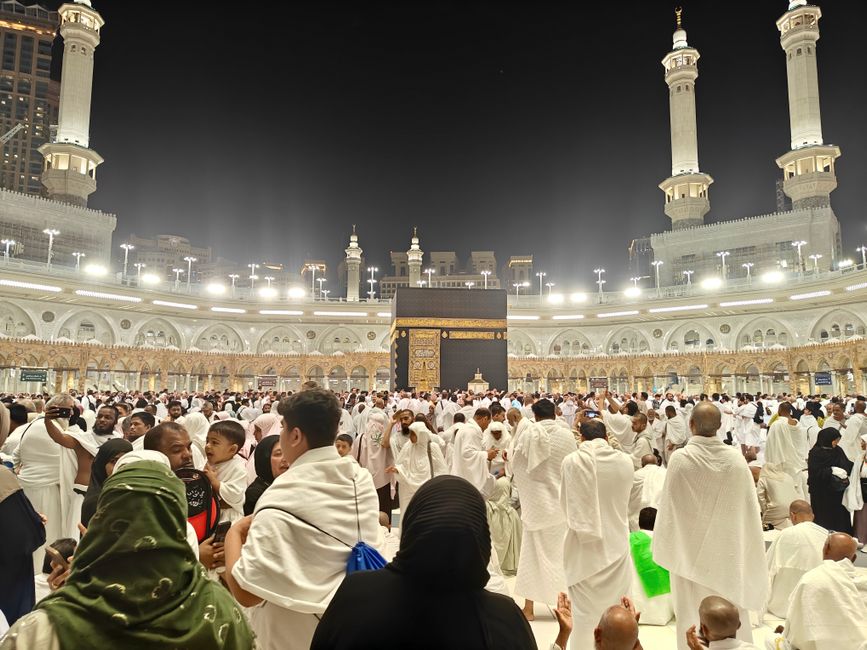
The short answer: In the Northern Hemisphere Ramadan, Makkah’s Adhan starts a few minutes earlier for Fajr and ends a few minutes later for Isha than Madina’s, while Maghrib follows the exact local sunset; these differences stem from the cities’ geographic coordinates and the Islamic method used to define twilight.
Both holy cities lie on the same longitude line, but Makkah (21.43° N) sits farther north than Madina (24.47° N). This latitude gap means sunrise and sunset occur at slightly different clock times, especially as the season shifts. During Ramadan, when fasting hinges on accurate prayer times, even a five‑minute variance can affect the start of Suhoor and the breaking of the fast.
Fajr timing relies on the disappearance of astronomical twilight. In most global Islamic calendars, the angle of the sun below the horizon is set at either 15° or 18°. Because Makkah’s horizon is marginally lower in the north, its calculated Fajr often appears 2‑4 minutes before Madina’s, giving believers in Makkah a slightly longer pre‑dawn window for Sahoor.
Dhuhr and Asr are solar‑based and follow the sun’s meridian crossing. Since the two cities share the same longitude, their Dhuhr times are virtually identical, while Asr may differ by a minute or two due to the slight variation in the length of the day caused by latitude. The Hanafi school, which counts Asr when an object's shadow equals twice its height, can push the timing a minute later in Madina during the longer summer days.
Maghrib is the most straightforward: it coincides with sunset. Because sunset occurs later in Madina than in Makkah during the summer months, the Maghrib Adhan in Madina will be a few minutes later, shifting the Iftar moment accordingly. HalalFaith’s Ramadan AI Calendar automatically syncs these local sunset times to provide precise countdowns for each city.
Isha marks the end of the night and is calculated from the disappearance of civil twilight. The deeper northern position of Madina means its civil twilight lingers slightly longer, so Isha in Madina typically follows Makkah’s by 3‑5 minutes. This later Isha can affect the timing of Taraweeh prayers for those traveling between the two cities.
Seasonal shifts intensify these differences. As the Northern Hemisphere tilts toward the sun, day length stretches and the angle of twilight changes, widening the gap between the two cities. Conversely, during the winter months, the gap narrows, sometimes to a single minute, but the principle remains the same.
For global Muslims who move between time zones, understanding these nuances is essential. HalalFaith’s Smart Masjid & Prayer Times Finder uses the user’s GPS to pull the exact coordinates of the nearest mosque and then applies the appropriate calculation method (e.g., University of Islamic Sciences, Karachi) to deliver city‑specific Adhan times, whether you’re in Makkah, Madina, or anywhere else.
The platform also offers an AI Halal Ingredient Scanner that can verify whether food purchased for Suhoor or Iftar complies with halal standards, ensuring that the extended fasting window created by earlier Fajr or later Isha does not compromise dietary observance. For more on how AI can safeguard your Ramadan meals, see our guide on What is the process for verifying halal status of new food products using AI?.
Travelers crossing time zones often wonder how to keep their prayer schedule aligned. HalalFaith’s AI Masjid Finder can suggest nearby mosques and automatically adjust Adhan times based on the local latitude and longitude, a feature especially handy for those jet‑lagged between Makkah and Madina. Learn more in our post on How can travelers use an AI masjid finder to plan prayers while jet‑lagging across time zones?.
In practice, the key takeaway for Muslims observing Ramadan in the Northern Hemisphere is to respect the local calculations: Makkah’s earlier Fajr and later Isha give a marginally longer fasting window, while Madina’s later Maghrib shifts Iftar a few minutes forward. Using reliable tools like HalalFaith ensures you stay precisely on schedule, no matter where you are.
Related Guide: How do live adhan calls adjust for daylight savings and different time zones?